Claremont Designs


Leave a comment

Chalking Up Another Walnut Edison Lamp

As soon as I finished the last walnut lamp it was time to turn around and build another one. The challenge is that I was out of any suitable walnut to build it out of. So a quick trip to the closest woodworking store was required. Unfortunately the only walnut they had in stock they referred to as “wide stock” or something to that effect. More importantly that meant that they were going to charge $9 a board foot for that lumber. For those that don’t know, a board foot is basically a cubic foot of lumber (1″ thick by 12″ wide by 12″ long). Similarly for those that don’t know, $9 is a lot for walnut. My last stack cost me around $3 a board foot. So after $54 for a 4/4 board 9″ wide and about 8 feet long it was off to the shop.

Once in the shop the first day of build followed a typical routine. I first selected the section of the board to use for the lamp and cut it to rough length. From there I needed to rip the board to an appropriate width. My jointer is only 8″ wide, so the 9″ wide board wasn’t going to work. More importantly if dealing with any cupping issues, you can get to a flat surface quicker if you start with a narrower board. Unlike my rough sawn lumber this piece was already surfaced on both sides (although not straight and flat). So before heading to the jointer, I’ve marked the boards with chalk to help check my progress (see photo below). The basic idea is that once all of the chalk is removed, I can be pretty confident that the lumber face is smooth and flat. After that its the same old process… Joint the edge; resaw a 1/4″ piece for the top at the band saw; rejoint the face and edge; run the boards through the planer; cut pieces to final dimension; then breakout the dovetail jig; cut the groove for the top board; sand the interior to 220; then glue the base up.

20130319-214754.jpg

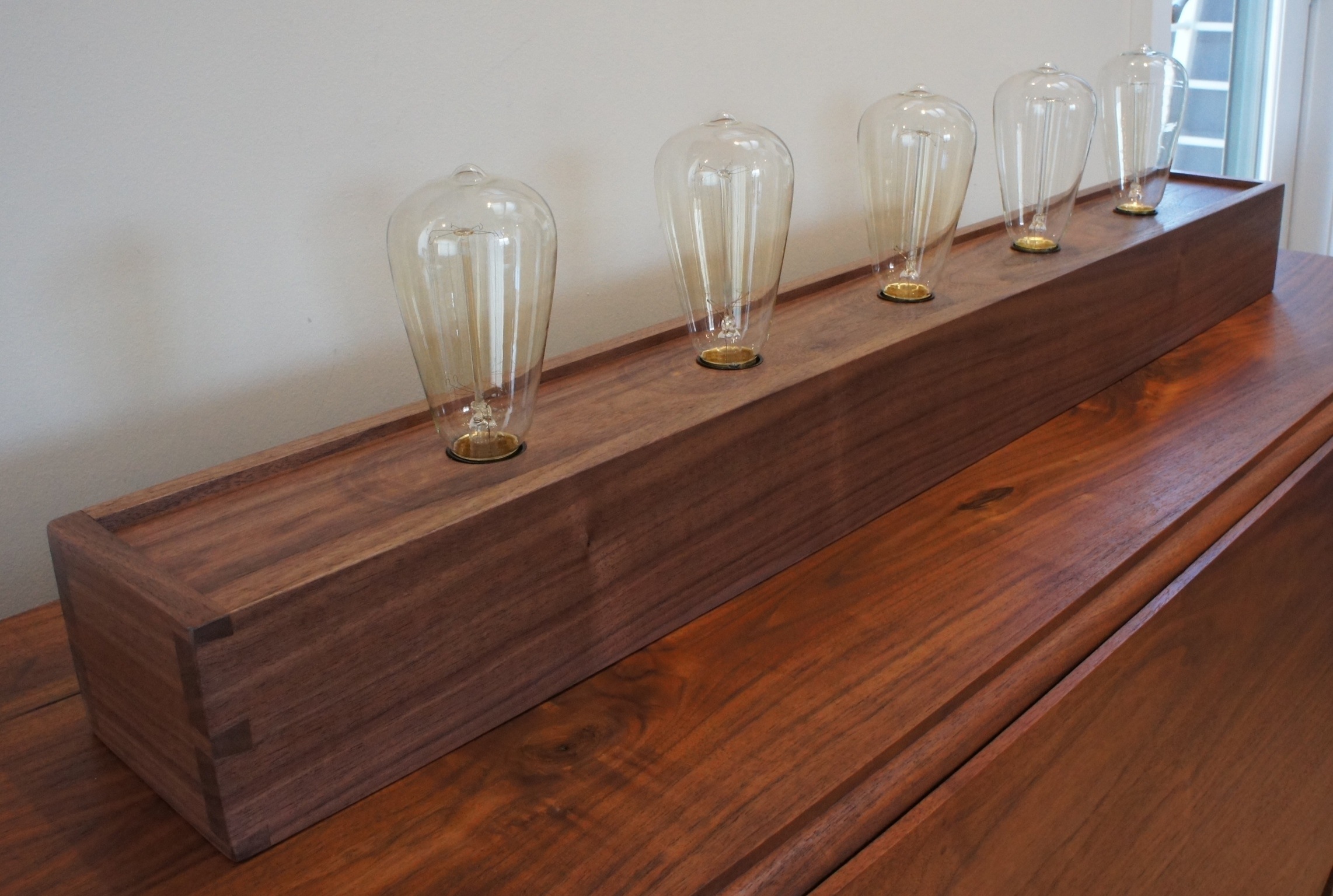
In this build the walnut was a hair narrower than I usually used so I switched over to the 14 instead of the 11 degree bits. The 14 degree bit is just a tiny bit too short (in my opinion). Consequently there was the smallest lip at the end of the cut. If you look really closely in the photo below, you might be able to see it. Not that big of a deal though – an extra couple of minutes of sanding before being able to glue the piece up. The base is sitting in the clamps now and will be ready for a lot of extra fit and finish next weekend.

20130319-214811.jpg


Leave a comment

Finished Sapele and Walnut EdisonLamps

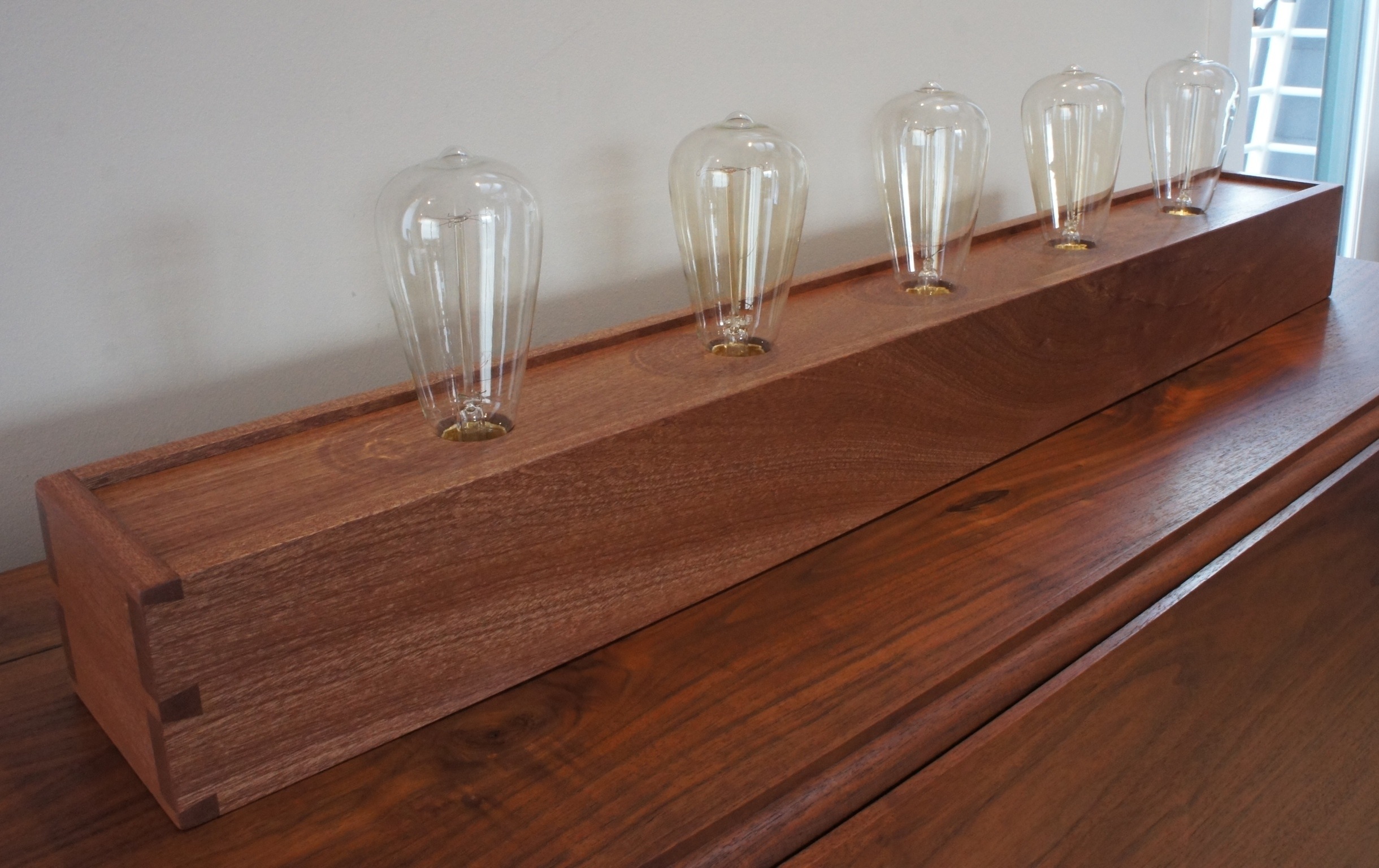
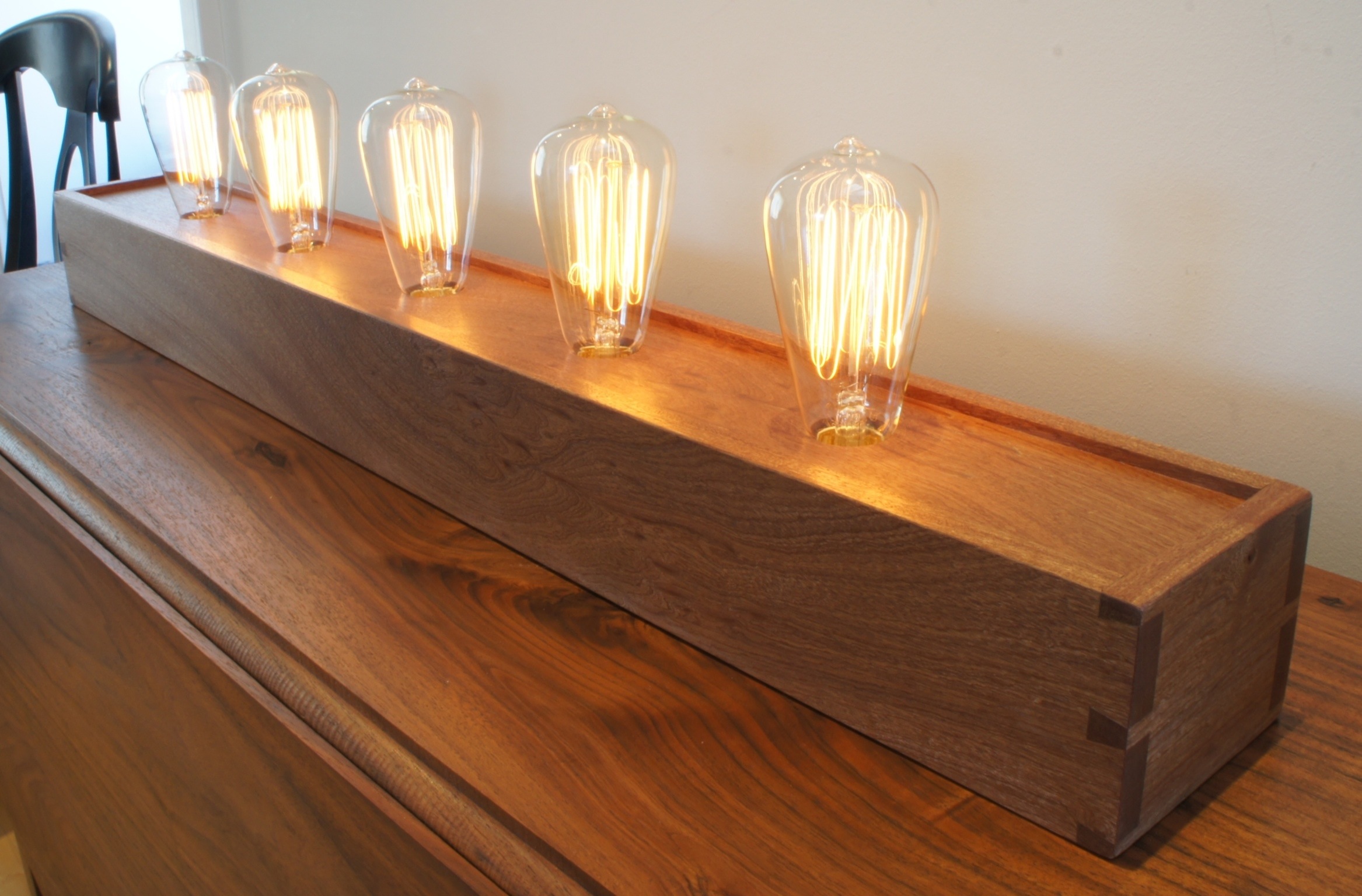
Just a quick post tonight to show the 2 most recently completed lamps… The walnut lamp was built for a customer and features my traditional Edison lamp design. On the sapele version I’ve switched over to a porcelain socket that doesn’t rise above the top of the lamp base. I really like the look of the bulbs being embedded in the base as a result. One of the sockets must be a tiny fraction of an inch below the surface of the top. As a result I had to really screw in one of the bulbs to get it to work… In the future I’ll have to ease the edges of the opening a bit more or make the top a bit thinner. I built this one to go on etsy and I think it will still go there, but I’ll definitely have to be very clear about how hard you have to screw down the one bulb…

20130309-222800.jpg

20130309-222834.jpg

20130309-222859.jpg

20130309-222941.jpg


2 Comments

Lots of Sanding for 2 Edison Lamps and Almost 40 Coasters

Just a quick interim post here to update on the status of current projects. In the photo are two Edison lamps that are ready for final finish. The walnut lamp is being built for a customer. It is a pretty standard build. The only distinction is that this is the first chance I’ve had to build a 5 bulb version out of walnut. I’m sad to say that this lamp used up the last real amount of walnut that I’ve been working from. The other lamp pictured is made from sapele. It’s the first time I’ve worked with sapele and so far I’m happy with the results. There was a distinctive pattern on the board that I featured on the front of the lamp. Taking it one step further, the 1/4 inch top board is book matched to the front to further highlight the pattern. Finally in the front left you can see the stack of coasters ready for finishing. The coasters are great but trust me that it’s a lot of work to sand all 6 sides, break the edges and steel wool between 2 coats of finish. It’s a great use of my scrap lumber, but it sure is a lot of work to get a product that I’m happy with.

20130303-143645.jpg


Leave a comment

Not Always Sure What You’re Going To Get When Starting a Walnut Edison Lamp

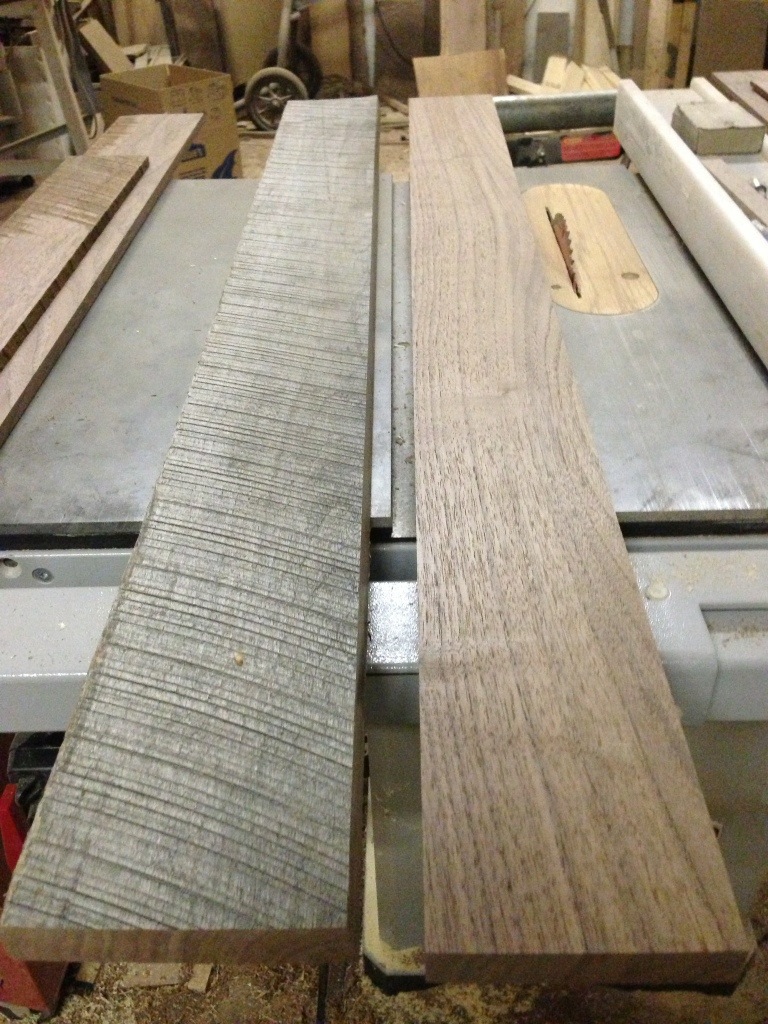
I’m finally building a 5 bulb Edison lamp out of walnut. I’ve been wanting to do a walnut version for a while now, and thankfully I just got an order for one through my shop on etsy. I’ve been working off of the same stack of walnut for years now, so I have a fairly good idea of how it will look when dressed. If I hadn’t been working from this same tree, I would be flying blind. In the photo below, you can see the board I used to construct the case. The board on the left is rough sawn; I haven’t done anything to it yet. The board on the right has been passed over the jointer (both to expose the beauty of the walnut and to flatten one face / square one edge). Sometimes you don’t know what you’re going to get until the lumber hits the jointer.

20130224-225032.jpg

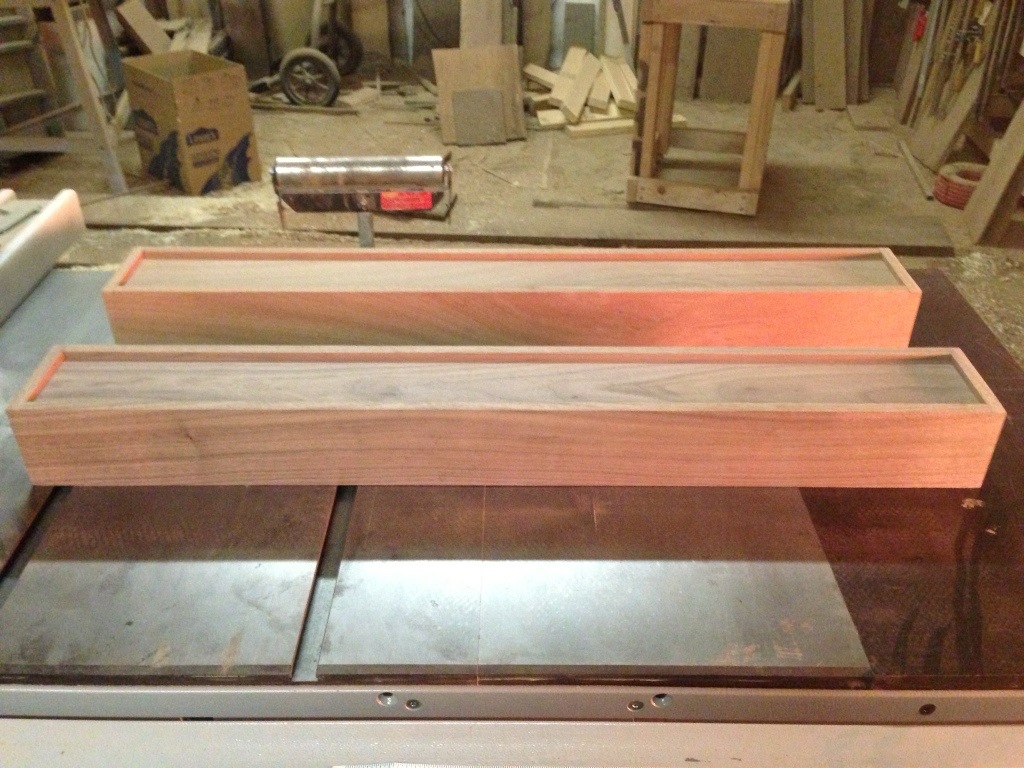
From there it was on to my normal sequence of planing, dimensioning, routing and assembling the case. I’m not going to detail those steps here, but there are plenty of other posts on this site that show those steps. Ultimately, I got to the point where the 2 boxes pictured below were ready for sanding. I decided I would add another lamp to the weekend build. Once you go through the steps to setup tools to build one, you feel like you might as well build a second one too. The box in the back is made from sapele. I’ve never worked with sapele before, but it seemed like I was getting a good deal on the lumber (and you can build an entire lamp from one board). Unfortunately, the photo isn’t the best… The ceiling light in my shop is not great, so the photo is overly lit by my space heater. As a result it’s hard to see any details or the colors of the lamps. Once I get to the finishing stages, all of the details will become clearer.

20130224-230348.jpg


Leave a comment

Initial Clamping For A Dovetailed End Table

I previously wrote that I didn’t agree with the common woodworker’s sentiment that you can never have too many clamps. I’m not making a complete reversal, but I would at least like to change my stance to note that I don’t think you can have too many reasonably sized clamps. The end table that I’m building has three separate dovetailed boxes each about 11″ x 22″ x 7″. Unfortunately I ran out of clamps and was only able to get 2 of them glued up before last leaving the shop. I still have plenty of extra clamps laying around the shop, but I didn’t have any that weren’t far too long or far to short to sensibly clamp up the third box. The picture below shows one of the boxes clamped up (standing on my ever trusty table saw workbench – I really need to finish that piece that has occupied my table saw for the past few months).

20130130-144922.jpg


Leave a comment

Dimensioning Walnut For A Dovetailed End Table

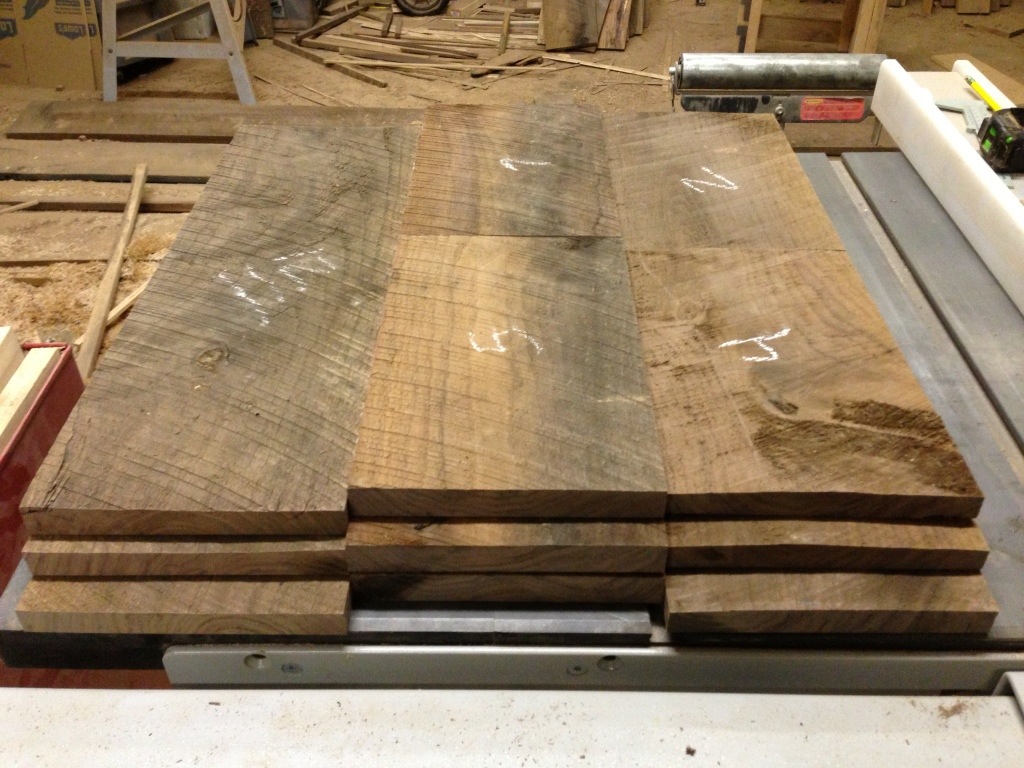
It can take a lot of work to get the rough sawn lumber ready for a new piece of furniture. In the last shop trip I spent several hours selecting, jointing and planing about 10 board feet of walnut. Normally I spend a fair amount of time selecting lumber for the piece I’m building, but in this case I’m down to only a few boards left in stock (so I made the most of what was available). After work on the jointer and the table saw, I was left with the stack of lumber you see in the first photo. As you can see, one side of the lumber hasn’t been surfaced and the boards are all of various thicknesses. Some boards were a little over an inch thick, but by the time I got them all to the same thickness they were somewhere around 5/8″ thick. For the piece I’m building the actual thickness is less important than having every piece being the exact same thickness (and completely flat). A little more work dimensioning on the next trip and then a lot of time in the dovetail jig.

20130121-184819.jpg

20130121-184836.jpg


Leave a comment

Edison Lamp Finish Coats and Fancy Coasters

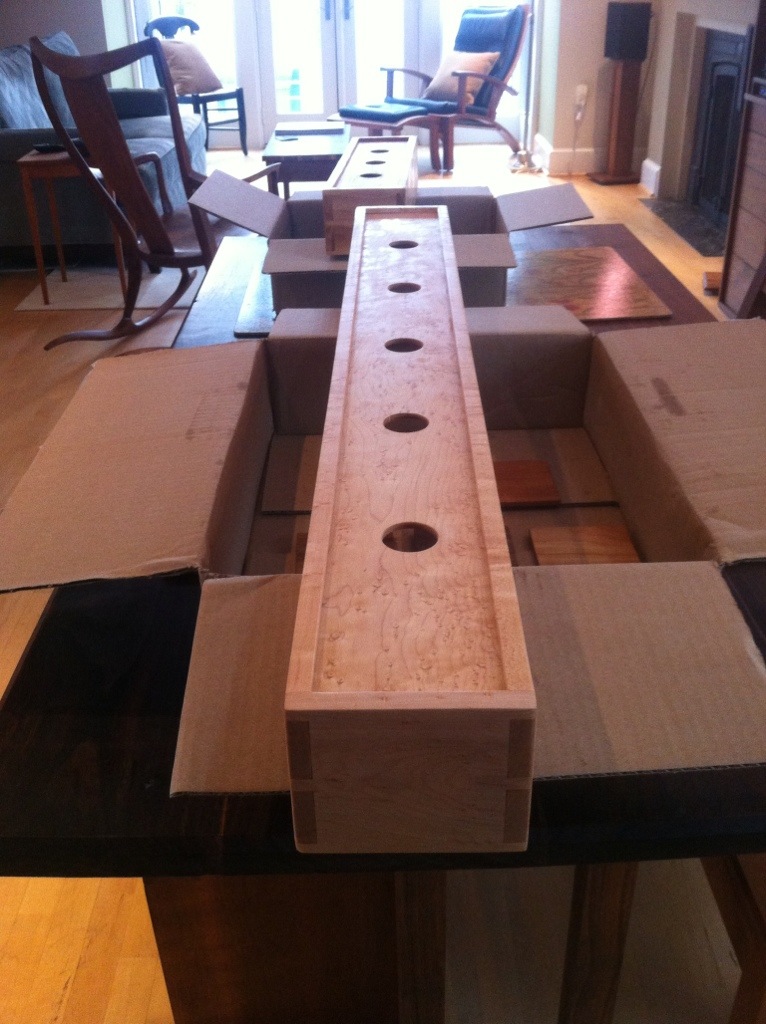
A real mixed bag of project work today. Thanks to a tardy FedEx delivery, started the day by running down to the shop to fit a dimmer switch into a new Edison lamp. With that out of the way, it was on to finishing work. Although I prefer to use an oil urethane blend for my finishing work, I switched things up a bit this time. This weekend’s finish work was using exclusively boiled linseed oil. It’s a finish I like, but you just need to be very careful with your rags because of the spontaneous combustion issue. The photo below shows my impromptu finishing area (aka my living / dining room with pieces resting on the edges of cardboard boxes.

20121209-203013.jpg

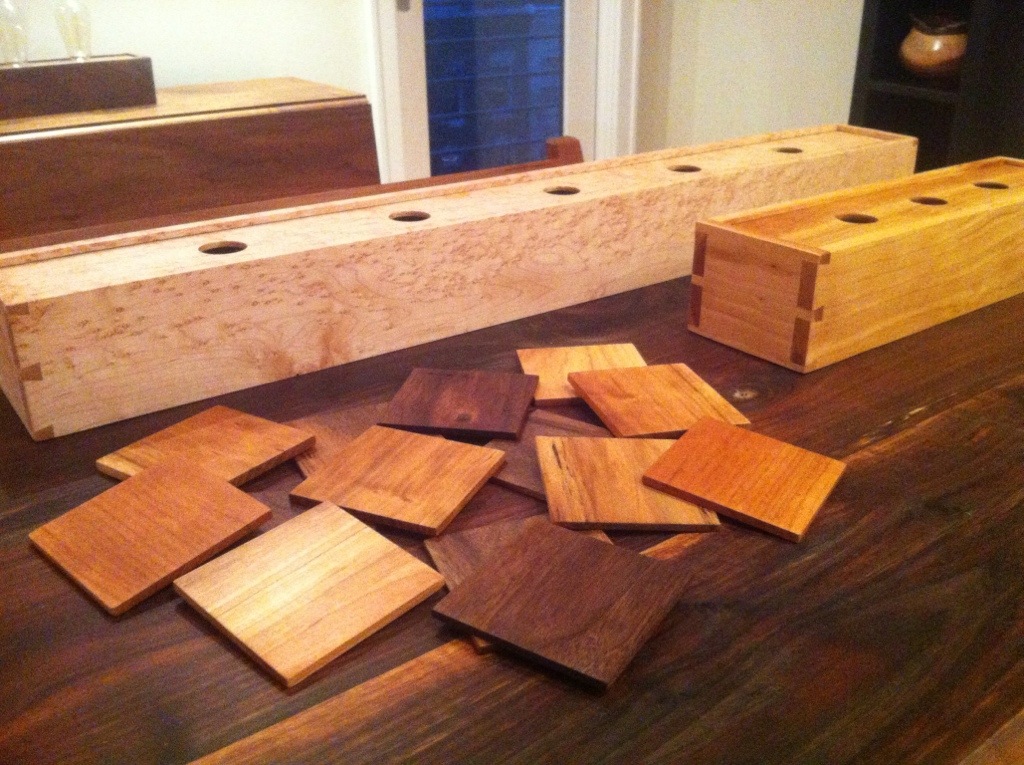
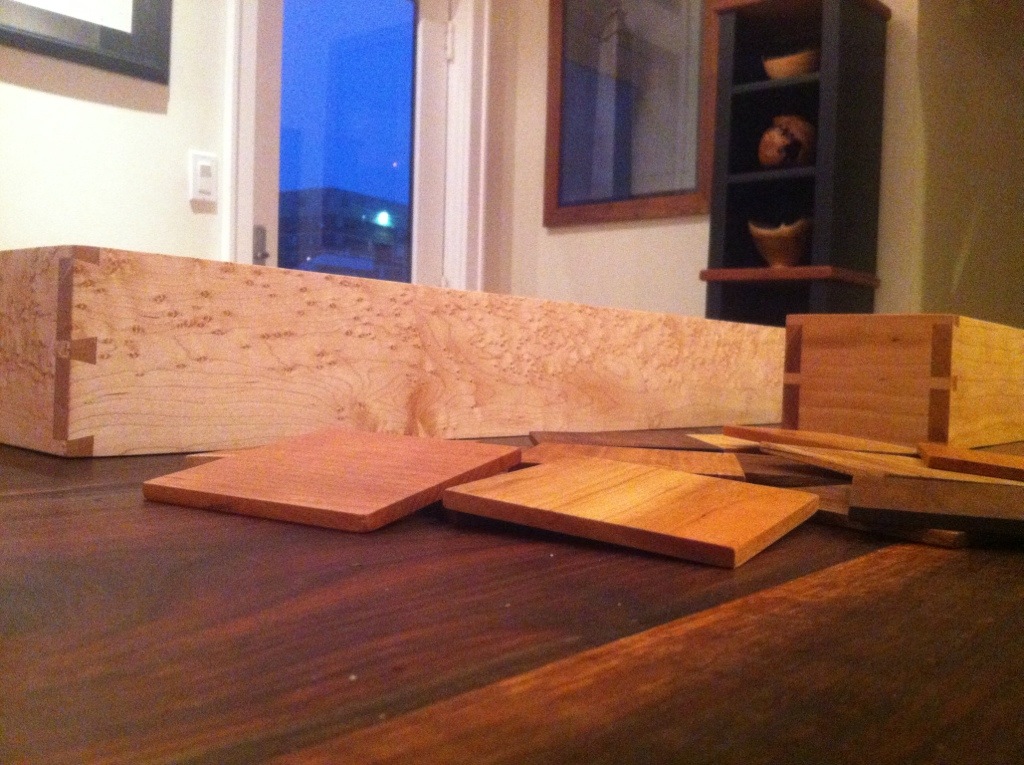
The following shots just show some extra perspectives on the current pieces that I’m working on. In the photos are the Birdseye maple piece that has been featured in the past few posts on this site. Also featured is a smaller 3 bulb version built out of cherry. The cherry was particularly light, but it has been warming up with more coats of finish. In the photos below, the small cherry piece has two coats of boiled linseed oil. The maple piece has just received its first coat (keeping in mind, that my iPhone doesn’t take the best photos). You’ll also notice scattered 3.5″ square pieces of wood. Given the amount of wood furniture I have in my house, coasters are an absolute must. Building items like the Edison lamps has generated a lot of thin stock that has no other use for me, so I’ve decided to start making drink coasters. If I make enough and get motivated, they might be the next item to make an appearance on etsy. Next post should have nicer photos of the finished pieces.

20121209-203053.jpg

20121209-203104.jpg

20121209-203118.jpg


Leave a comment

Spalted Walnut Dovetailed Edison Lamp Base

On a quick trip to the shop post Thanksgiving, I started work on yet another Edison lamp. I had a small piece of spalted walnut in the shop. It wasn’t really big enough to incorporate into any other piece, so I thought I would see how it would look as a lamp base. It might ultimately end up being too busy in the final design, but I wanted to give it a shot. The photo below shows a partial dry fit after I cut the dovetails. This one shouldn’t take long to finish from here.

20121125-220826.jpg


Leave a comment

Clamping the Gate

Finally back to the shop for some weekend work. Between business travel and the start of college football and NFL, the time has been somewhat limited. It does look like UVA is trying to convince me that staying home to watch games on Saturdays is a waste of my time.

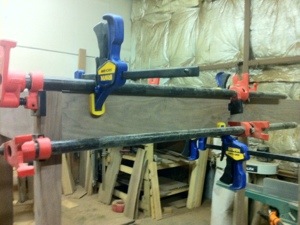
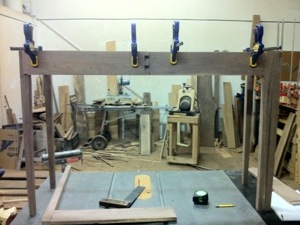
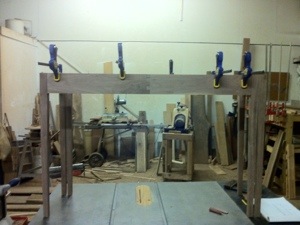
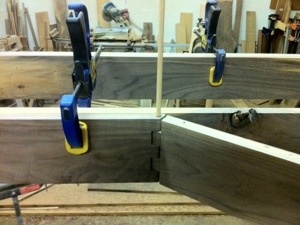
In the picture below I’m starting the clamping for the gate leg table. It looks simple, but is actually a little more challenging than anticipated. The clamped piece in the photo only extends about half the length of the apron. As a result I need enough force to keep the tenon fully seated in the mortise in the leg, but there can’t be so much pressure that the piece wants to bow. For the piece to look nice and function well, it is important that this half of an apron is tightly joined to the full apron that was previously clamped up. For now everything looks good, but we’ll see how we’ll it dried the next time I get to the shop. This was the last assembly step for the gate leg table, so the next trip should include sanding and a first coat of finish.

20120924-104136.jpg


Leave a comment

Building a Wooden Hinge

Shown in the series of photos below is the construction of the wooden hinge that makes the gate leg table work. It may not be obvious on a quick glance, but the table base here has 6 legs. The 4 outside legs are fixed, but the interior leg on each side swings open (like a gate) to support one leaf of the table. In the first photo I was laying out the pieces to get accurate dimensions. Measurements and plans are great (I use them), but sometimes it is easier or more accurate to just layout the pieces and mark the cuts. The second photo shows the apron with the initial cuts for the hinge. Finally I transferred some layout lines and identified where to drill the through hole that receives a dowel (to allow the leg to swing open). The final photo shows a dry fit of the piece with the leg partially open. You’ll notice that I had to add a couple of relief cuts to actually allow for the leg to pivot freely. Time for glue up and then on to finishing. As always I’ve reverted to using the table saw as my workbench.

20120826-215300.jpg

20120826-215310.jpg

20120826-215321.jpg