Claremont Designs


Leave a comment

Chalking Up Another Walnut Edison Lamp

As soon as I finished the last walnut lamp it was time to turn around and build another one. The challenge is that I was out of any suitable walnut to build it out of. So a quick trip to the closest woodworking store was required. Unfortunately the only walnut they had in stock they referred to as “wide stock” or something to that effect. More importantly that meant that they were going to charge $9 a board foot for that lumber. For those that don’t know, a board foot is basically a cubic foot of lumber (1″ thick by 12″ wide by 12″ long). Similarly for those that don’t know, $9 is a lot for walnut. My last stack cost me around $3 a board foot. So after $54 for a 4/4 board 9″ wide and about 8 feet long it was off to the shop.

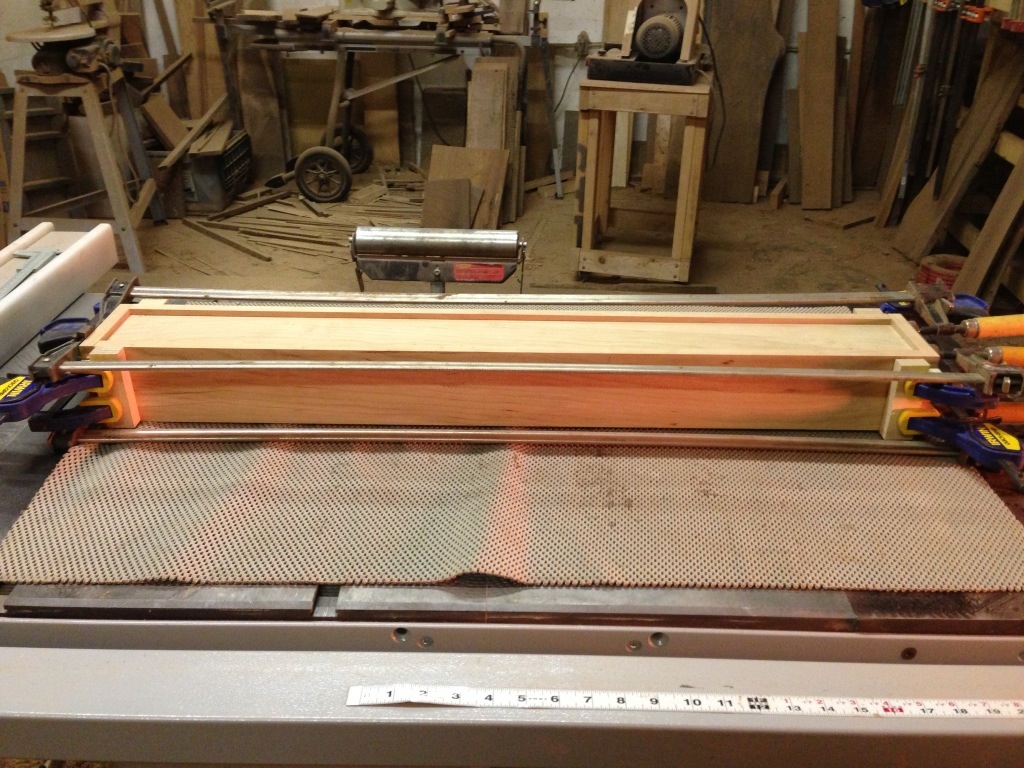
Once in the shop the first day of build followed a typical routine. I first selected the section of the board to use for the lamp and cut it to rough length. From there I needed to rip the board to an appropriate width. My jointer is only 8″ wide, so the 9″ wide board wasn’t going to work. More importantly if dealing with any cupping issues, you can get to a flat surface quicker if you start with a narrower board. Unlike my rough sawn lumber this piece was already surfaced on both sides (although not straight and flat). So before heading to the jointer, I’ve marked the boards with chalk to help check my progress (see photo below). The basic idea is that once all of the chalk is removed, I can be pretty confident that the lumber face is smooth and flat. After that its the same old process… Joint the edge; resaw a 1/4″ piece for the top at the band saw; rejoint the face and edge; run the boards through the planer; cut pieces to final dimension; then breakout the dovetail jig; cut the groove for the top board; sand the interior to 220; then glue the base up.

20130319-214754.jpg

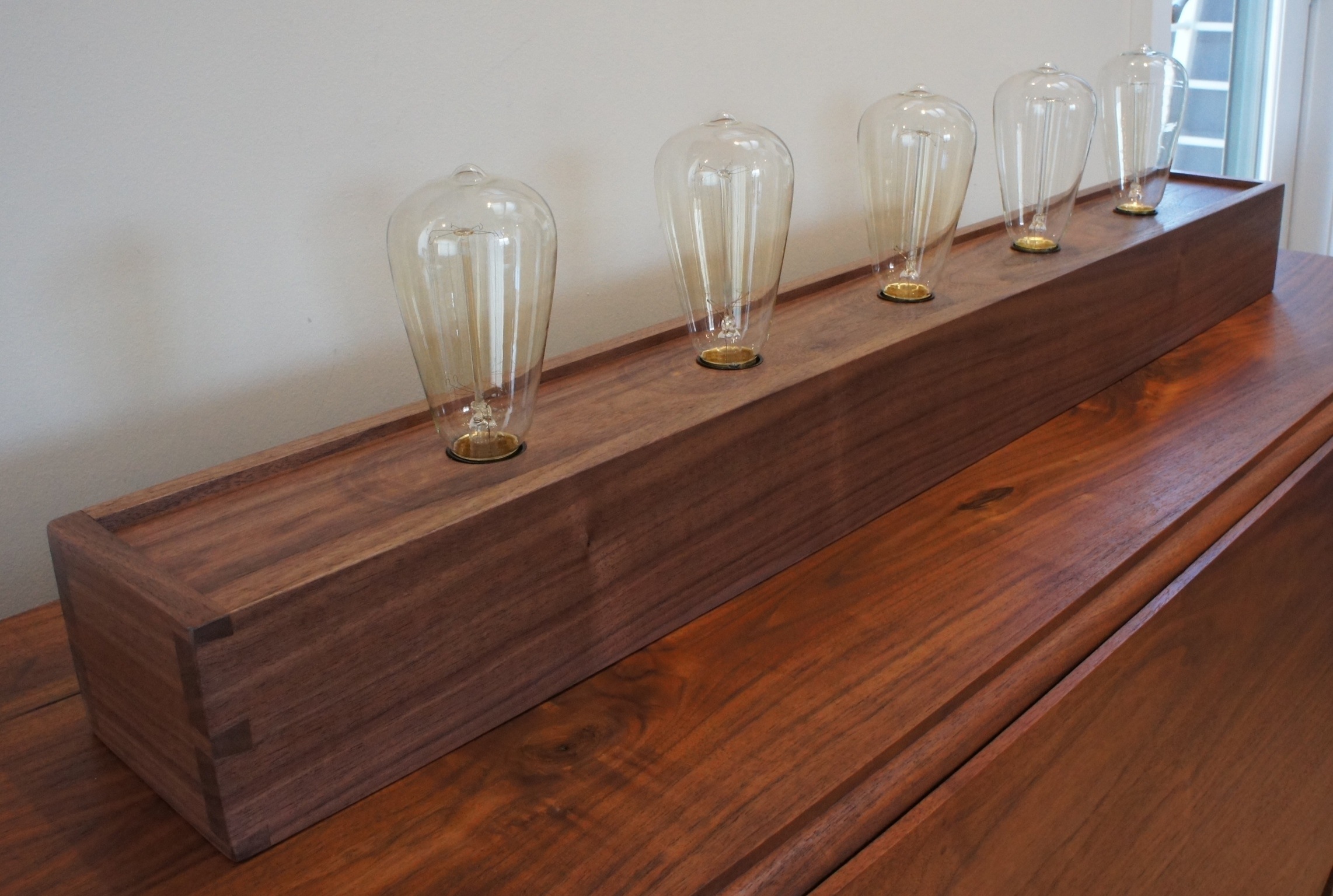
In this build the walnut was a hair narrower than I usually used so I switched over to the 14 instead of the 11 degree bits. The 14 degree bit is just a tiny bit too short (in my opinion). Consequently there was the smallest lip at the end of the cut. If you look really closely in the photo below, you might be able to see it. Not that big of a deal though – an extra couple of minutes of sanding before being able to glue the piece up. The base is sitting in the clamps now and will be ready for a lot of extra fit and finish next weekend.

20130319-214811.jpg


Leave a comment

Finished Sapele and Walnut EdisonLamps

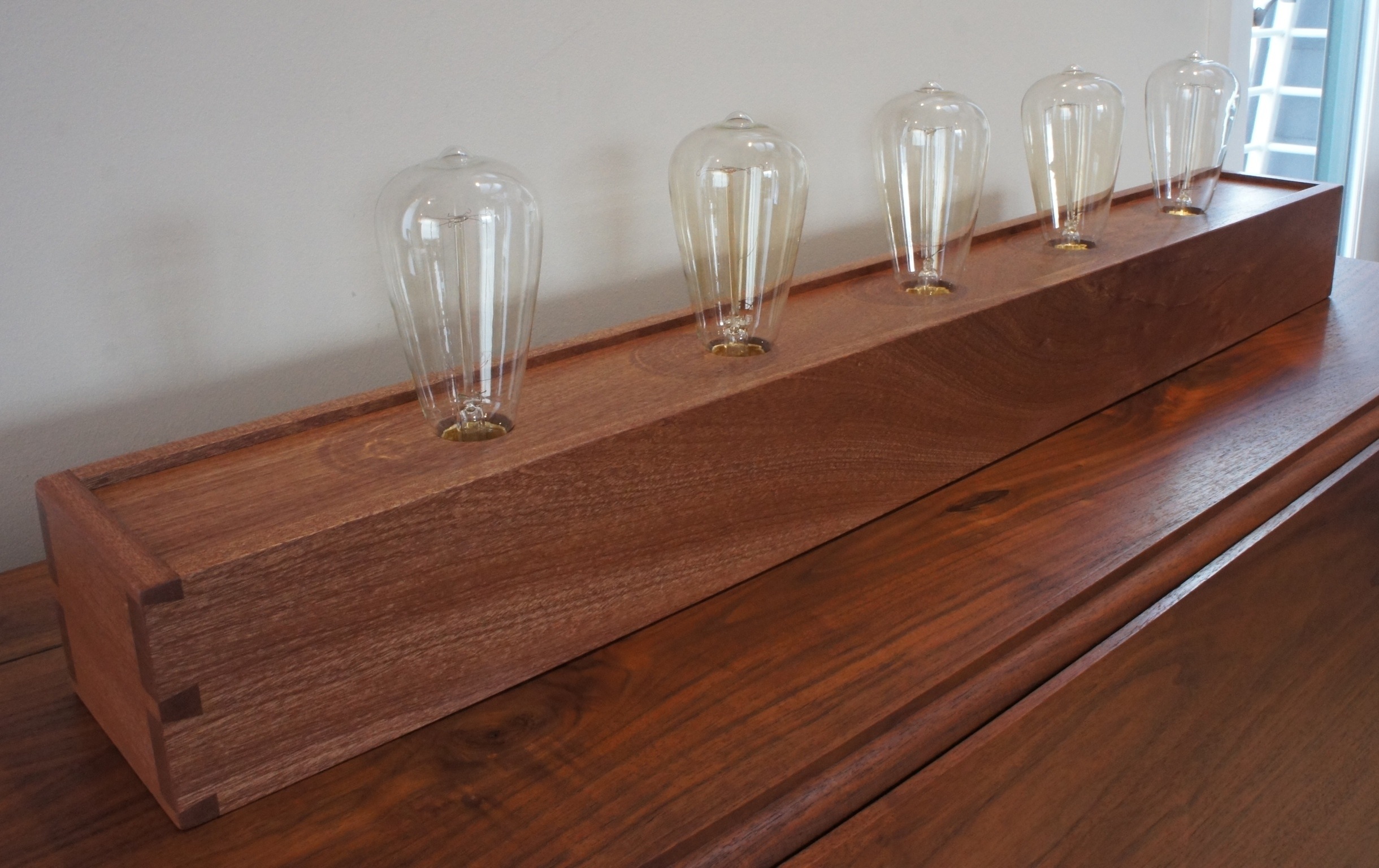
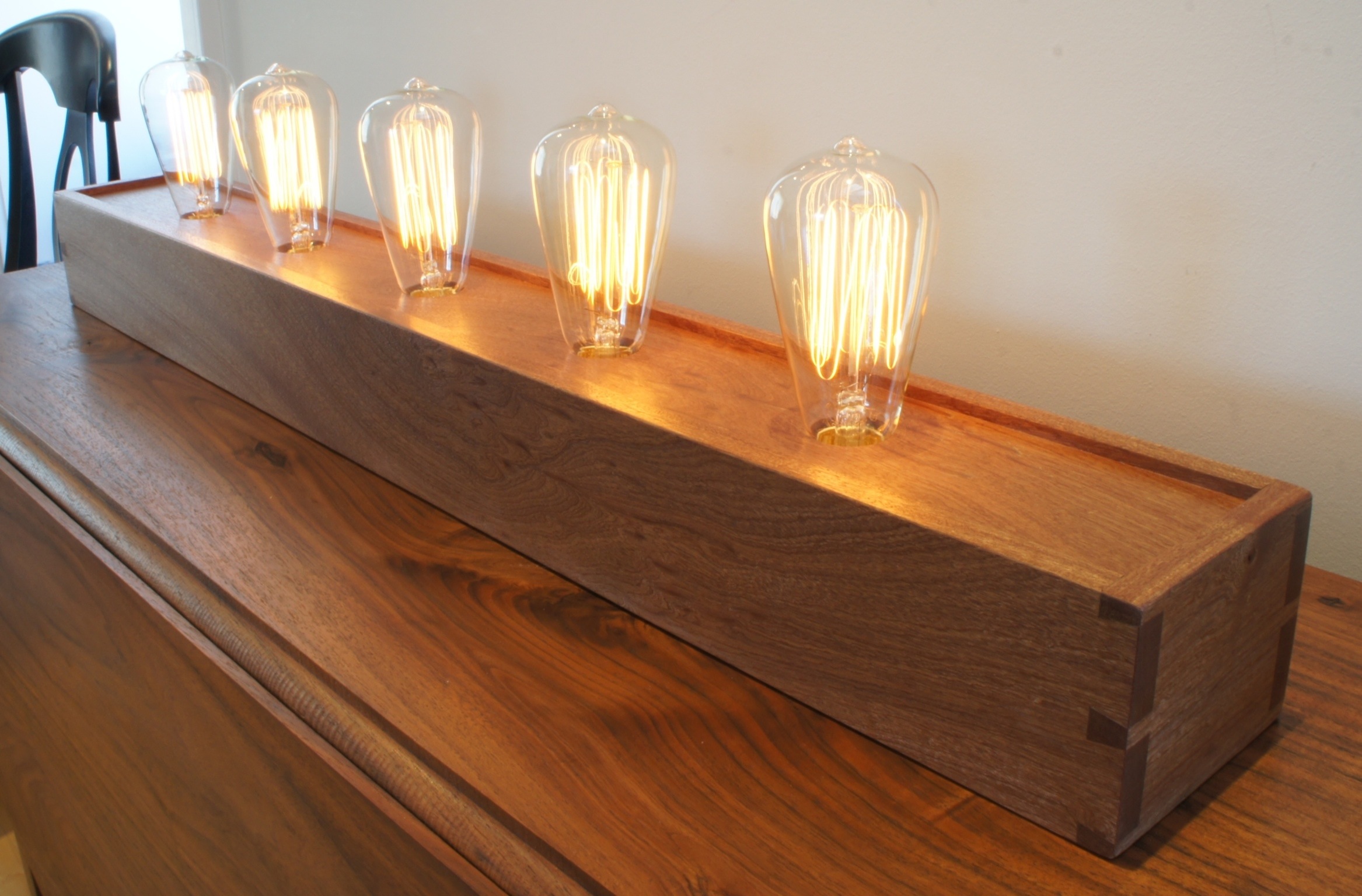
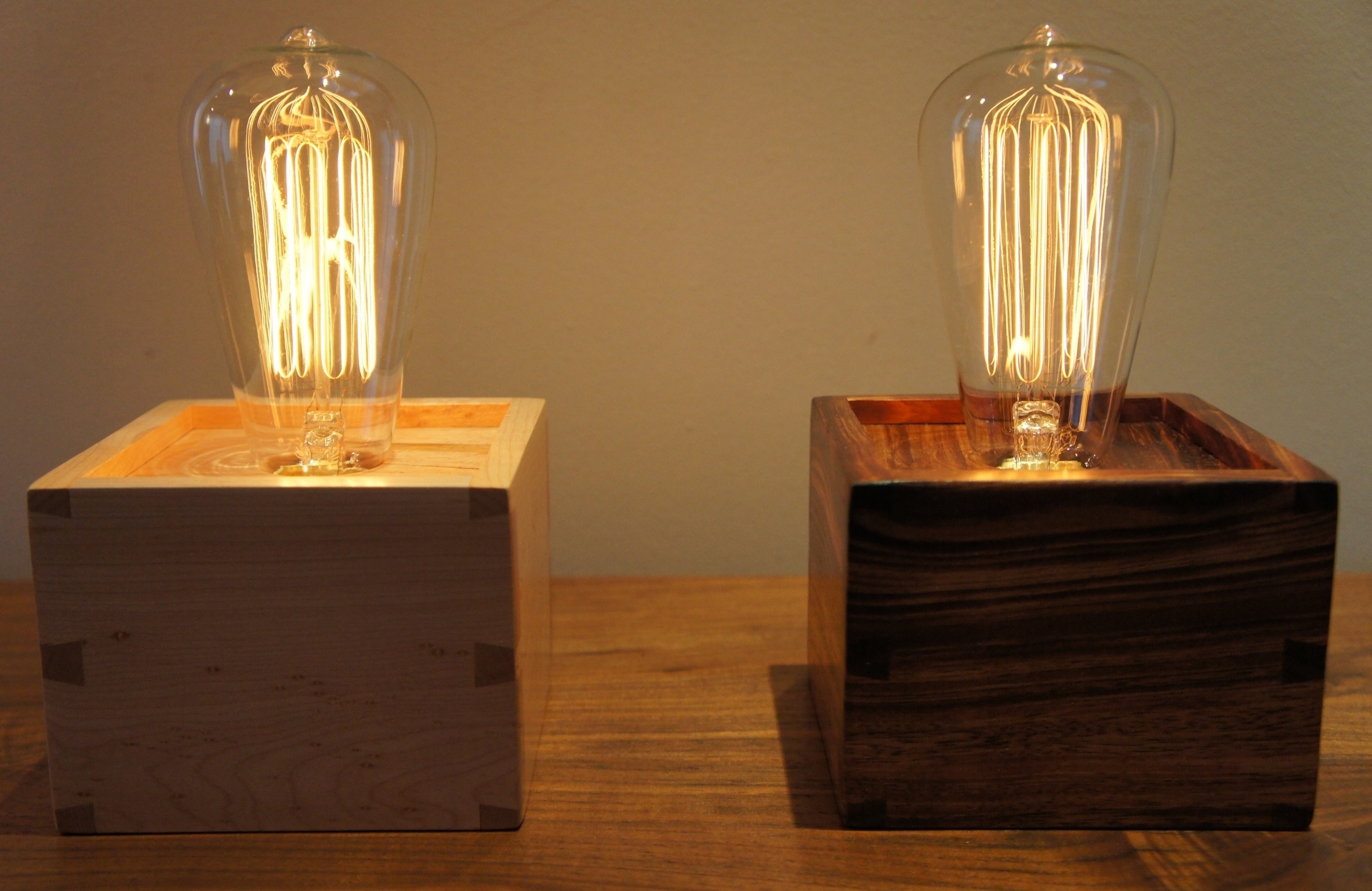
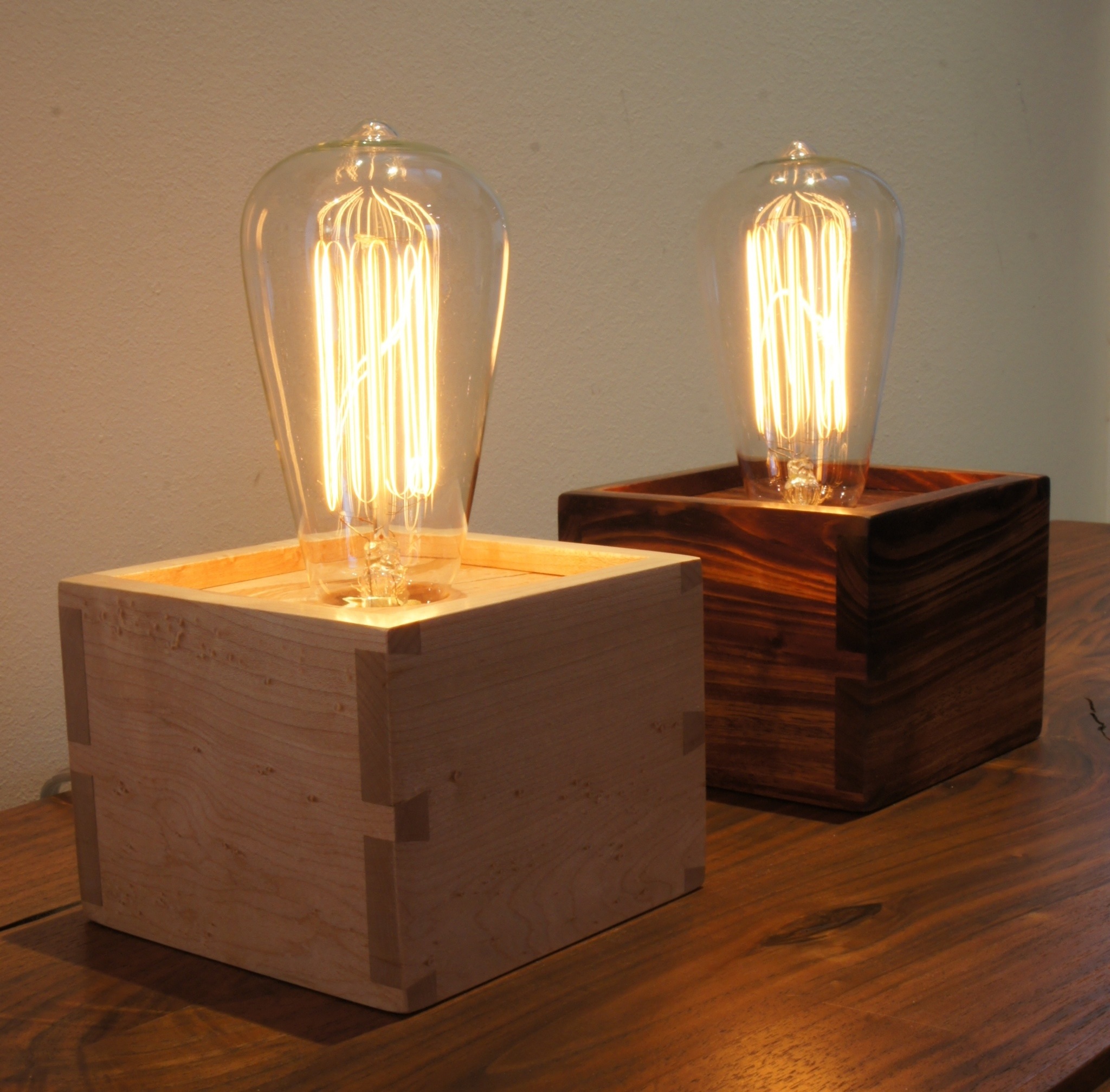
Just a quick post tonight to show the 2 most recently completed lamps… The walnut lamp was built for a customer and features my traditional Edison lamp design. On the sapele version I’ve switched over to a porcelain socket that doesn’t rise above the top of the lamp base. I really like the look of the bulbs being embedded in the base as a result. One of the sockets must be a tiny fraction of an inch below the surface of the top. As a result I had to really screw in one of the bulbs to get it to work… In the future I’ll have to ease the edges of the opening a bit more or make the top a bit thinner. I built this one to go on etsy and I think it will still go there, but I’ll definitely have to be very clear about how hard you have to screw down the one bulb…

20130309-222800.jpg

20130309-222834.jpg

20130309-222859.jpg

20130309-222941.jpg


2 Comments

Lots of Sanding for 2 Edison Lamps and Almost 40 Coasters

Just a quick interim post here to update on the status of current projects. In the photo are two Edison lamps that are ready for final finish. The walnut lamp is being built for a customer. It is a pretty standard build. The only distinction is that this is the first chance I’ve had to build a 5 bulb version out of walnut. I’m sad to say that this lamp used up the last real amount of walnut that I’ve been working from. The other lamp pictured is made from sapele. It’s the first time I’ve worked with sapele and so far I’m happy with the results. There was a distinctive pattern on the board that I featured on the front of the lamp. Taking it one step further, the 1/4 inch top board is book matched to the front to further highlight the pattern. Finally in the front left you can see the stack of coasters ready for finishing. The coasters are great but trust me that it’s a lot of work to sand all 6 sides, break the edges and steel wool between 2 coats of finish. It’s a great use of my scrap lumber, but it sure is a lot of work to get a product that I’m happy with.

20130303-143645.jpg


Leave a comment

Not Always Sure What You’re Going To Get When Starting a Walnut Edison Lamp

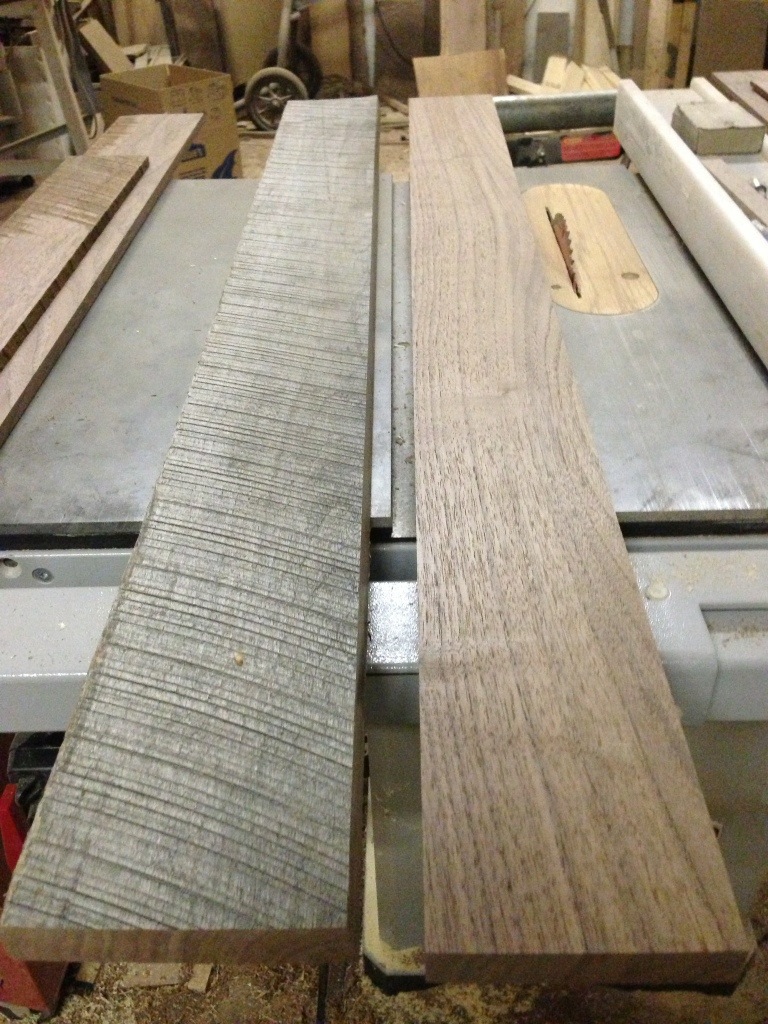
I’m finally building a 5 bulb Edison lamp out of walnut. I’ve been wanting to do a walnut version for a while now, and thankfully I just got an order for one through my shop on etsy. I’ve been working off of the same stack of walnut for years now, so I have a fairly good idea of how it will look when dressed. If I hadn’t been working from this same tree, I would be flying blind. In the photo below, you can see the board I used to construct the case. The board on the left is rough sawn; I haven’t done anything to it yet. The board on the right has been passed over the jointer (both to expose the beauty of the walnut and to flatten one face / square one edge). Sometimes you don’t know what you’re going to get until the lumber hits the jointer.

20130224-225032.jpg

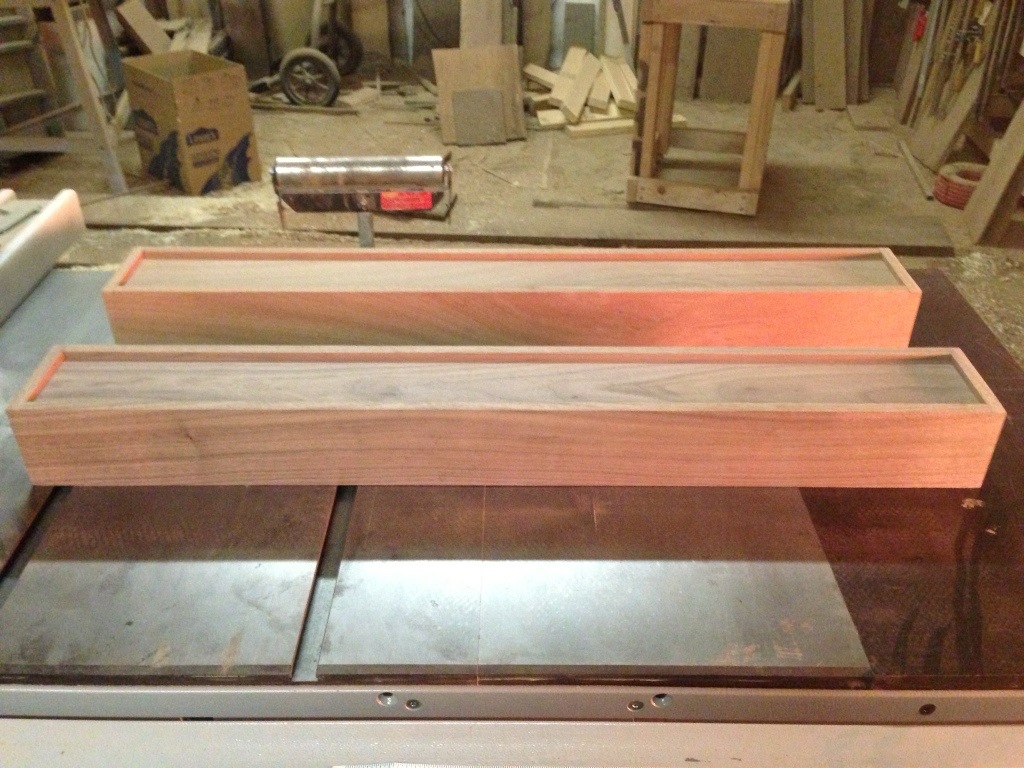
From there it was on to my normal sequence of planing, dimensioning, routing and assembling the case. I’m not going to detail those steps here, but there are plenty of other posts on this site that show those steps. Ultimately, I got to the point where the 2 boxes pictured below were ready for sanding. I decided I would add another lamp to the weekend build. Once you go through the steps to setup tools to build one, you feel like you might as well build a second one too. The box in the back is made from sapele. I’ve never worked with sapele before, but it seemed like I was getting a good deal on the lumber (and you can build an entire lamp from one board). Unfortunately, the photo isn’t the best… The ceiling light in my shop is not great, so the photo is overly lit by my space heater. As a result it’s hard to see any details or the colors of the lamps. Once I get to the finishing stages, all of the details will become clearer.

20130224-230348.jpg


Leave a comment

Single Bulb Edison Lamps

Just a quick post here that is mostly photos oriented… While working on a 5 bulb Edison lamp for a customer, I also built some new single bulb versions. These don’t have homes currently, so they’ll sit in inventory unless someone wants to buy them. If you are interested, either contact me directly or just check out my shop on etsy.

20130210-172000.jpg

20130210-172015.jpg

20130210-172028.jpg

20130210-172041.jpg

20130210-172053.jpg


2 Comments

Finished 5 Bulb Cherry Edison Lamp

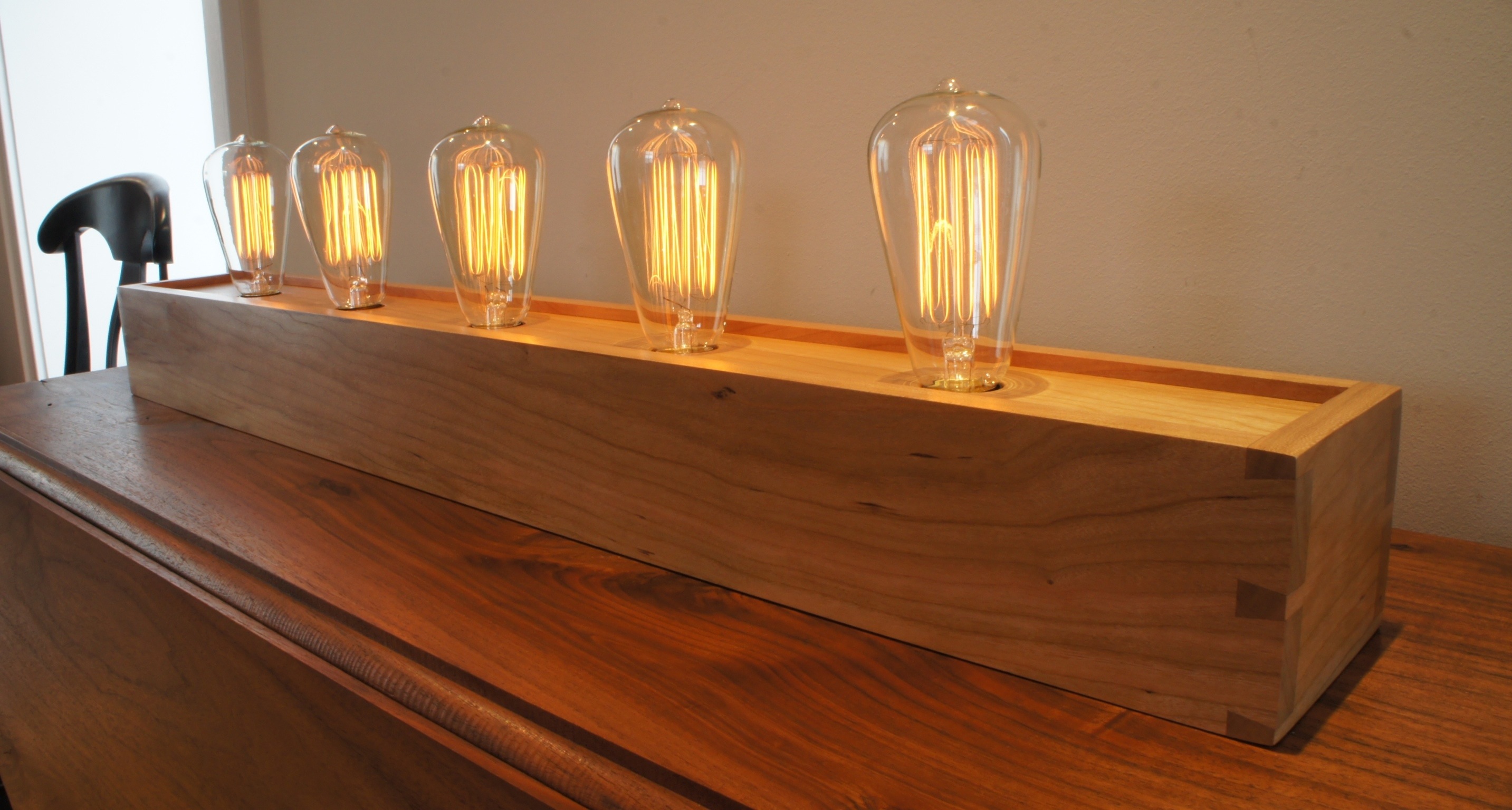
If I were to ever go back to my old naming convention this piece would be known as 5 bulb Edison lamp 3. This is the third version of a 5 bulb lamp that I’ve built. While I still think the 3 bulb version of the lamp looks great, the 5 bulb version is superior in my opinion. Not all spaces can accommodate this size however. In that case the 3 bulb looks great, or even a collection of the 1 bulb version I’ve made would look terrific. Regardless of the choice, below are a few photos of the latest 5 bulb Edison lamp…

20130210-165501.jpg

20130210-165534.jpg

20130210-165604.jpg


Leave a comment

Second To Last Step In Building 3 Edison Lamps

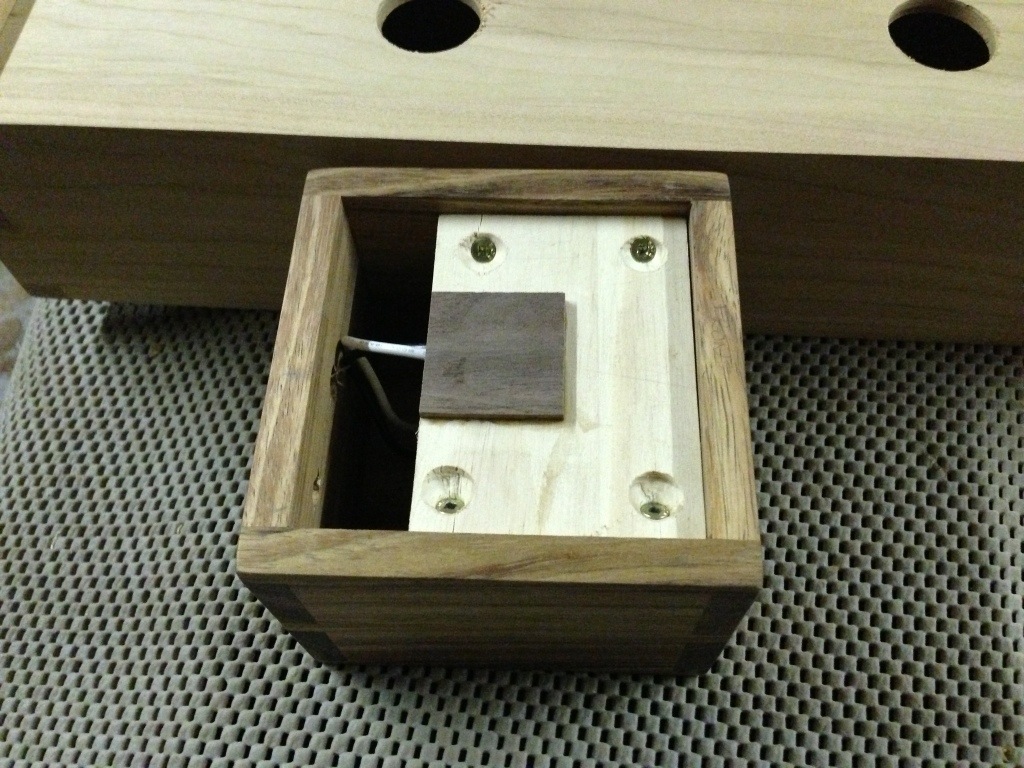
Well it isn’t really the second to last step in building an Edison lamp, but photos of the final wiring steps are (possibly) less interesting than these photos of finalizing the fit of the lamps. The photos below show the inner components of the lamps. The close-up shows the bottom side of the single bulb koa Edison lamp. I used a different style socket in this lamp and as a result I had to reroute the wiring. Normally I can keep all of the wiring above the wooden support, but in this case the wiring needed to be routed through the nipple. To prevent the wiring from extending past the base of the lamp I glued a thin piece of walnut scrap where the wires come through the bottom. Although the base is screwed into the box in this photo, I will need to remove it before applying the final finish. The second photo shows the five sockets for the 5 bulb cherry lamp. Much like the koa version, I established the final fit by screwing it into place before moving to the finishing steps. The next post will include final photos of the finished products.

20130206-234343.jpg

20130206-234401.jpg


Leave a comment

Continuing the Build of a New 5 Bulb Edison Lamp

Continuing along with one of my earlier posts, I figured that I would focus in on the building of an Edison lamp. In this case I wanted to show two of the aspects of the build that I don’t usually give a lot of attention. For the lamps, I’ve started using a full range dimmer switch. The switches are a little larger than the ones I used to use, but the ability to dim the Edison bulbs is worth it. The lights are capable of being used as a room light source, but for the most part they are a decorative piece of furniture. And when the light is dimmed down low, it’s really easy to see the patterns of the filaments in the bulbs. The challenge is to make room for the switch. First I locate the position of the switch and then move over to the dedicated mortising machine. The goal here is to make the back of the lamp thinner where the switch is located. Next I need to take a forstner bit to make room for the knob. It’s important that the knob is recessed into the lamp to improve the overall appearance of the piece. The photo below shows a quick test fitting of the switch.

20130203-082048.jpg

The next aspect I wanted to highlight was the location of the holes for the sockets. In all of my lamps, I use a wooden board to attach the sockets to… The challenge is to get the hole for the light socket nipples dead center in the larger diameter hole that exposes the sockets. I start by sizing the support board so that it fits perfectly inside the top lip of the lamp. Then with simple layout lines, I locate the center point of each bulb (shown in the first photo below with pencil lines). From here I’m able to use a drill press to drill a series of holes at each location to generate the final cutouts shown in the second photo. The process starts by drilling one hole through the support board and the top at the same time. This is followed by making the hole in the support board just a little wider to fit the nipple. Finally after removing the support board, I cut out the larger diameter hole to fit the socket.

20130203-082824.jpg

20130203-082835.jpg

In the next post, I’ll highlight more of the interior working of the Edison lamp. Then it’s off to finishing.


Leave a comment

Initial Steps In Building a New 5 Bulb Edison Lamp

I’ve had quite a few posts on building Edison lamps over the past year. I figured in this post I would show a few more of the steps getting the process started. Everything starts by finding one good piece of cherry at least 7 feet long and a little more than 4″ wide. The goal is to get all pieces of the lamp out of the same piece of lumber. Sourcing from one piece helps in matching the color, and you can match the grain wrapping around the piece. It’s not always easy to figure out what a piece of rough sawn lumber is going to look like once surfaced, but you want to avoid knots and splits / checks as much as possible. The picture below shows 2 pieces from the same board. The bottom one has been passed over the jointer whereas the top board hasn’t.

20130126-213431.jpg

Thankfully the original piece of lumber was a little over an inch think. As a result I was able to get the top of the lamp out of this same piece of lumber. With one face and one edge jointed and square to each other, I proceeded to the bandsaw to resaw the boards to make quarter inch think pieces for the top. This generates much more 1/4″ lumber than needed, so I will just use the excess for additional drink coasters. From here it’s one more quick trip to the jointer followed by the planer to get everything surfaced and the correct thickness (I usually shoot for 1/2″ to 5/8″ thick for Edison lamps). This is followed by cutting boards to width and length. At this point it is time to move to the dovetail jig (and praying that there isn’t any much tear out). Finally, a little work at the router table to create the groove for the 1/4″ think top board. The end result is what’s shown in the photo below.

20130126-213516.jpg

Now it’s time to move to the random orbit sander. Once it’s glued up, I’ll never be able to get to the inside of the box. In general the inside is not seen in the finished piece, so the sanding job doesn’t need to be perfect. Most of the effort is dedicated to the small lip above the groove for the top. That is the only part of the “inside” that will ever be seen in the final product. Once the sanding was done, it was time for gluing and clamping. It will sit in the clamps overnight, and I’ll start finishing the exterior in the morning.

20130126-213555.jpg


Leave a comment

Sanded Koa and Birdseye Maple Dovetailed Boxes

With all of the prior patch work completed on the boxes, I was able to finish sanding up the two small dovetail boxes that I was working on. Assuming that there is enough room on the interior for a dimmer switch these will both become single bulb Edison lamps. The only thing left that I could screw up would be cutting the hole for the light socket. Hopefully this will be finished up after one more shop trip.

20130120-100243.jpg